
AI-generated artwork can be a useful way to communicate an idea. It can help show a general style, layout, theme, or visual direction when it might otherwise be difficult to describe exactly what you have in mind.
AI is already becoming part of the creative process in the promotional products industry. According to ASI’s 2025 State of the Industry research, 24% of suppliers and 19% of distributors use AI for artwork or video generation.
Artwork used for printing, embroidery, engraving, and other decoration methods has to meet specific production requirements. AI-generated images rarely account for those requirements, which is why we consider them a starting point rather than production-ready artwork.
AI artwork may need additional attention because of its file type, level of detail, and the limitations of the product or decoration method being used. Brand standards, licensing requirements, readability, and the overall flow of the design also need to be considered before artwork can move into production.
Understanding those differences early can help set expectations and make the artwork process smoother from concept to production.
Why Vector Artwork Matters for Promotional Products
A large part of our art process relies on vector artwork.
Unlike a flat image made from pixels, vector artwork is built from editable shapes and paths. This allows our artists and suppliers to resize, separate, adjust, and prepare individual elements of a design without losing quality.
Vector artwork makes it easier to:
- Resize artwork for different products and imprint areas
- Separate individual colors or design elements
- Adjust artwork for different decoration methods
- Maintain sharp, clean lines at different sizes
- Make production-related changes without rebuilding the entire design
That flexibility is especially important when artwork needs to be screen printed on a shirt, embroidered on a hat, engraved on drinkware, or resized for an entirely different product.
In our experience, AI-generated artwork is usually provided as a flat raster image rather than a true, editable vector file. Even when an AI image looks sharp on a computer screen, there usually is not usable artwork underneath it for our production team to work with.
As a result, an AI-generated design may need to be partially or completely recreated by our art team before it can be sent to production. Depending on the complexity of the design, that process can add significant artist time and may result in additional art fees.
This is not unique to AI artwork. Our team regularly recreates logos, old files, low-resolution graphics, screenshots, and other artwork that is not production ready. AI images simply tend to require this process more often because of their file format and level of detail.
Turning Great Ideas Into Great Imprints
That includes considering:
- Visual hierarchy and where the eye goes first
- Readability at the final imprint size
- Spacing between text and graphic elements
- Correct spelling and grammar
- Balance and overall composition
- How the design fits the shape of the product
AI can generate interesting visual possibilities, but it does not reliably make those decisions with the same understanding of the finished product. Our artists look at all of those details while also considering what can realistically be produced.
Decoration Methods Can Change What Is Possible
There is no single set of artwork requirements that works for every promotional product.
A design that works well with one decoration method may need to be adjusted for another. The product itself, available imprint area, material, number of colors, and supplier capabilities can all influence how artwork needs to be prepared.
Depending on the project, our team may need to consider:
- Whether fine details will hold when embroidered
- How many colors can be used for a particular imprint
- Whether gradients or shading can be reproduced
- How small text can be before readability becomes an issue
- How artwork will look against the product color or material
- Whether the design needs to be resized or rearranged for the available imprint area
This is why a design that looks finished on a screen may still need additional art preparation before it becomes a finished promotional product.

Following Brand Guidelines and Licensing
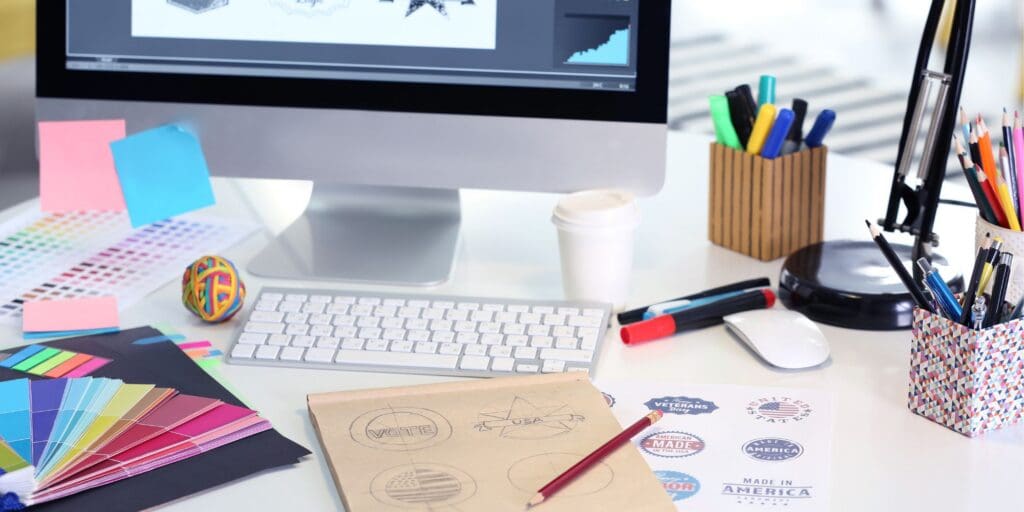
Brand consistency is another important part of preparing artwork for promotional products.
AI tools do not automatically know your organization’s approved colors, fonts, logo usage rules, or licensing requirements. Even when a generated image looks close to an established brand, small differences can matter.
Brand and licensing requirements may include:
- Approved logo versions and placement
- Specific brand colors
- Required fonts and typography
- Clear space around logos
- Rules for altering or combining brand elements
- Approved use of mascots, trademarks, or other licensed graphics
Using the correct colors, typography, logos, and visual standards helps people recognize and trust a brand. For colleges, universities, licensed organizations, and other clients with formal brand requirements, those guidelines may also determine whether a design can be approved at all.
That means an AI-generated concept may need to change even when the original image looks great.
Providing official logos, brand guidelines, approved colors, fonts, and other existing artwork gives our designers the information they need to build something that feels connected to your brand from the beginning.
Think of AI Artwork as a Creative Reference
One of the most helpful things to keep in mind is that an AI-generated image is best viewed as a visualization of an idea rather than a preview of exactly what the finished artwork or promotional product will look like.
AI has the freedom to create without considering:
- The available imprint area
- The decoration method
- The number of colors that can be used
- Product materials and surfaces
- Supplier production requirements
- Brand or licensing guidelines
- Whether every detail can actually be manufactured
When our designers take these things into consideration, the final production-ready artwork may not be an exact recreation of the original AI image.
Certain elements may need to change, including:
- Simplifying fine details
- Adjusting the layout or proportions
- Moving or resizing text
- Changing colors
- Removing elements that will not reproduce clearly
- Reworking the composition to better fit the product
That does not mean the original idea is lost. The most helpful part of an AI concept is often the direction behind it.
If you send us an AI-generated image, tell us what you like about it. Maybe it is the overall mood, a particular graphic element, the arrangement of the design, the color inspiration, or simply the general idea.
Knowing which parts matter most gives our artists much more useful direction than trying to reproduce every detail exactly. It also gives our team room to preserve what made the original concept appealing while adapting it for your brand and the realities of production.

Helping Us Understand Your Vision
When working with TK Promotions, we’ll look at the overall concept along with your brand guidelines, the product you’ve selected, and the decoration method being used. From there, we can identify what will translate well and where adjustments may be needed.
When available, it is helpful to send:
- Official logo files
- Current brand guidelines
- Approved brand colors and fonts
- Existing branded materials or artwork
- Notes about which parts of the AI-generated concept you like most
- Information about where or how the promotional product will be used
It can also be helpful to tell us what caught your attention in the original concept, such as:
- The overall look or mood
- A specific illustration or graphic
- The general layout
- A color combination
- The typography style
- A particular theme or idea
These details give our artists a better understanding of what should carry through to the final design, even when some of the original artwork needs to change.
Bringing Your Idea to Life
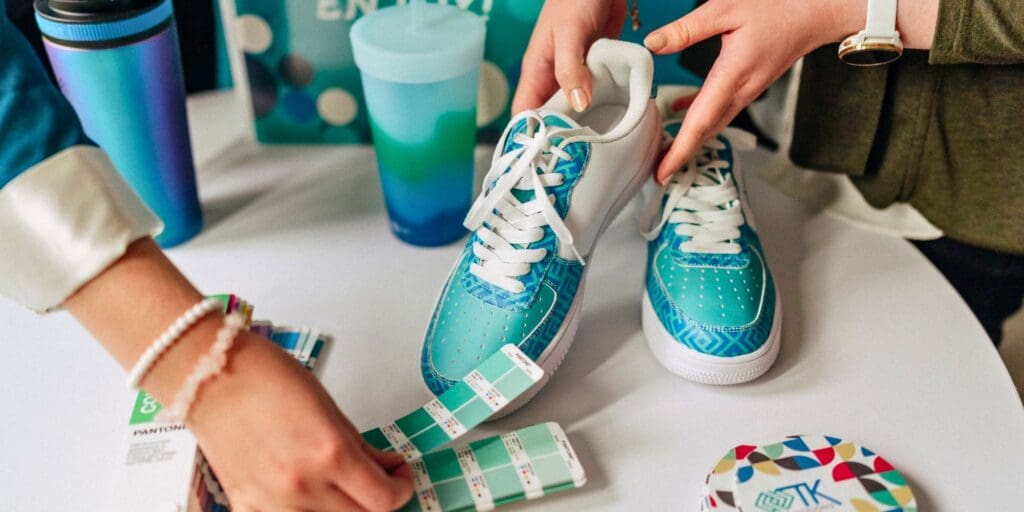
Our goal is to take the inspiration you provide and develop artwork that works with your favorite products.
Every finished design needs to balance the original creative direction with the brand standards, product, available imprint area, and selected decoration method. Our team also considers supplier production requirements, readability, and overall design quality to make sure the artwork works as well on the finished product as it does in the initial concept.
AI can help start the conversation. From there, our art and production teams help turn that idea into artwork designed specifically for your brand and your product.
Frequently Asked Questions About AI Artwork
Can I use AI-generated artwork for promotional products?
Yes. AI-generated images can be helpful for communicating a concept, style, or creative direction. We recommend treating them as inspiration rather than final production artwork.
Why does AI artwork usually need to be recreated?
Most AI-generated images are raster files, while our art process relies heavily on editable vector artwork. Depending on the design, our artists may need to partially or completely recreate the image before it can be prepared for production.
Does artwork for promotional products need to be vector?
Vector artwork is often preferred because it can be resized, edited, separated by color, and prepared for different decoration methods without losing quality. Exact artwork requirements can vary depending on the product, supplier, and decoration method.
What file types work best for promotional product artwork?
Editable vector files are typically the most useful for production. Common formats include AI, EPS, SVG, and vector PDFs, although exact requirements can vary by supplier and decoration method. Keep in mind that simply saving a raster image in one of these formats does not make the artwork vector.
Can an AI-generated image be printed exactly as it looks?
It depends on the product and decoration method. Some full-color processes allow for more detail, while embroidery, screen printing, engraving, and other methods may require artwork to be simplified or adjusted.
Why can't every detail from an AI image be reproduced?
The finished product, imprint size, number of colors, decoration method, supplier capabilities, brand standards, and licensing requirements can all affect what is possible. Details that work on a screen may need to be adapted to reproduce clearly on a physical product.
Will recreating AI artwork result in an art fee?
It depends on the complexity of the design and the amount of artist time required. More involved AI-generated concepts may require significant recreation before they are production ready, which can result in additional art fees.
What should I send with an AI-generated concept?
Whenever possible, provide your official logo files, brand guidelines, approved colors and fonts, and any other existing brand assets. It is also helpful to let us know specifically what you like about the AI image so our artists understand which elements of the concept are most important to preserve.